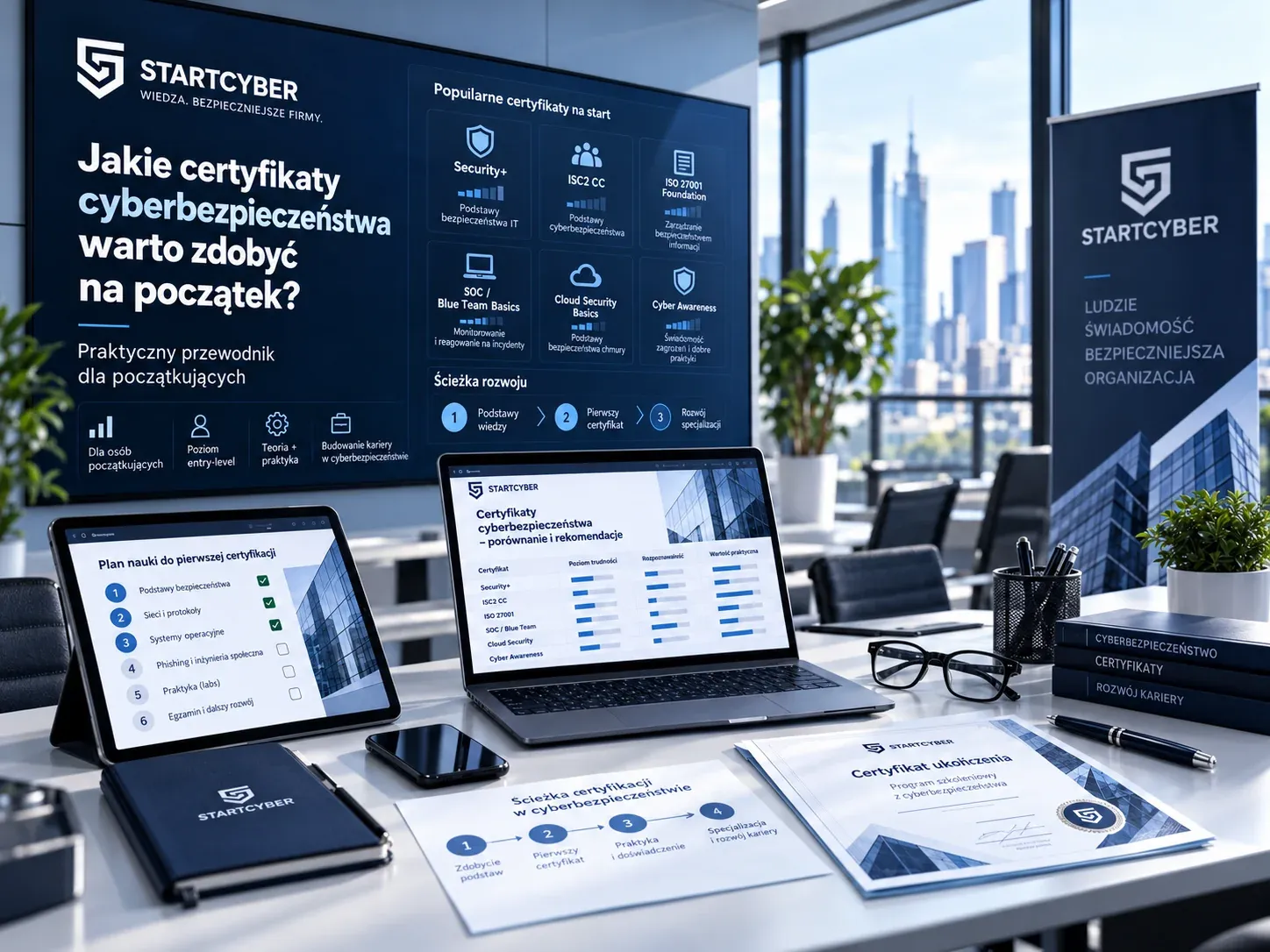
For a first cybersecurity qualification, compare ISC2 Certified in Cybersecurity (CC) with CompTIA Security+. CC is designed for newcomers without work experience. Security+ is worth considering once you have a foundation in networks and operating systems. For Microsoft-focused roles, look at SC-900 as well. Treat AZ-900 as supporting cloud knowledge, not a cybersecurity specialist credential.
You do not need all four. Choose one that fits your starting point and intended work, then leave time to apply what you learn. Being able to explain a small project gives you something useful to discuss alongside an exam result.
Information checked on 29 October 2026. Exam objectives, promotions and maintenance policies can change. Confirm the issuer’s current terms before paying for an exam or training package.
A course certificate is not the same as an industry certification
A course completion certificate records that you met the training provider’s requirements, such as completing a project. Credentials such as CC, Security+ and Microsoft Fundamentals involve a separate exam and the issuer’s own conditions. Attending a preparation course does not automatically award the associated industry certification.
Before enrolling, establish which document you will receive, who issues it and how it can be verified. Check whether the price covers the exam or preparation only. On your CV, distinguish completed training, exam preparation in progress and an awarded certification. Each tells a different story.
Comparing entry-level cybersecurity certifications
Use the comparison below to choose a direction. It is not a prestige ranking or a sequence of exams that everybody needs to complete.
| Credential | Main focus | When to consider it |
|---|---|---|
| ISC2 CC | Cybersecurity fundamentals | You are entering the field without professional security experience |
| CompTIA Security+ | Threats, safeguards and risk management | You have IT foundations and want to build structured security knowledge |
| Microsoft SC-900 | Security, compliance and identity in Microsoft services | You expect to work with Microsoft environments |
| Microsoft AZ-900 | Cloud concepts and Azure services | You need cloud foundations before choosing a specialization |
ISC2 CC for a first introduction to cybersecurity
Certified in Cybersecurity has no work-experience requirement. Its scope covers security principles, governance, identity and access, networks, cloud security concepts and incident response. Consider it when you need a structured introduction before deciding where to specialize.
Pair the syllabus with a small exercise. Create a permissions list for a fictional team and explain why each person needs their access. Then describe what should change when someone leaves. Passing a foundational exam should not be confused with being ready to design an organization’s security arrangements independently.
CompTIA Security+ once you have IT foundations
Security+ addresses threats, access controls, data protection and risk management, among other subjects. CompTIA recommends Network+ and two years of security-focused IT administration experience as preparation. Use that guidance to assess your starting point rather than assuming that an introductory security qualification must be straightforward for every beginner.
Check whether you can explain DNS, authentication versus authorization and the purpose of event logs. Fill gaps before concentrating on practice questions. As an exercise, compare two ways of protecting remote access to a fictional service and justify the option you would choose.
SC-900 for Microsoft security, compliance and identity
SC-900 is the exam for Microsoft Certified Security, Compliance, and Identity Fundamentals. It introduces security concepts and the capabilities of Microsoft services, including Entra, Defender, Sentinel and Purview. The emphasis is understanding what the services do and where they fit.
Consider it for an interest in identity, permissions or information protection in Microsoft environments. Describing a feature is not the same as deploying it. Alongside study, create a fictional document-access scenario, identify relevant safeguards and explain what you would need to establish before configuring them.
AZ-900 for supporting cloud knowledge
Microsoft Azure Fundamentals is not a cybersecurity specialist certification. AZ-900 covers cloud concepts, Azure architecture and services, and management and governance. Access and security are included, but the scope is broader than cybersecurity.
The material is useful when you cannot yet explain the division of responsibility between a cloud provider and its customer. You do not have to pay for the exam immediately. Decide whether you need the credential or whether studying and practicing the topics is sufficient for now. AZ-900 is not a compulsory step before SC-900.
Match the first certification to the work you want
Starting from scratch? Compare the CC objectives with your current knowledge. Choose one target and build your understanding of systems, networks and access. Avoid booking four exams before you have tried the kinds of tasks that interest you.
Already working in helpdesk or IT administration? Consider Security+ as a way to organize and extend your existing knowledge. Combine preparation with lab-based configuration, log analysis and documentation of decisions. Time in a role does not necessarily mean you have covered every exam topic.
Interested in IAM, GRC or cloud work? Choose additional learning for the environment involved. SC-900 can help you understand Microsoft security services, while AZ-900 addresses Azure foundations. For governance, risk and compliance, or GRC, also practice interpreting requirements and assessing evidence that safeguards work.
Review several comparable vacancies. Separate mandatory credentials from desirable ones and examine the responsibilities attached to them. Our guide to starting a cybersecurity career sets out a broader learning path.
Why CISSP and CISA are usually later decisions
Do not select a qualification merely because an experienced professional lists it on their profile. Full CISSP and CISA certification requires relevant professional experience. An exam pass alone does not confer the credential.
You can sit the CISA exam before meeting its experience conditions, but those requirements must be satisfied before certification is awarded. Someone passing the CISSP exam without the required experience can pursue Associate of ISC2 status, which is not the CISSP designation. Check the rules against your background rather than assuming earlier work in audit or IT cannot count.
For a complete beginner, we recommend foundations and practice first. For someone with a relevant professional background, a different choice may make sense. Being new to a cybersecurity job title does not necessarily mean having no relevant experience.
Budget for more than the exam fee
Before purchasing, account for the exam attempt, study resources, practice facilities and a possible retake. Check the voucher’s region and expiry date. For foreign-currency prices, establish the total payable amount and taxes rather than relying on an old promotion.
Consider the maintenance requirements too. ISC2 CC requires 45 continuing professional education credits over a three-year cycle, alongside an annual maintenance fee. These credits record relevant professional development. Security+ also has renewal requirements under CompTIA’s policies. Microsoft Fundamentals credentials, including SC-900 and AZ-900, currently do not expire, although the exam objectives and underlying services change.
Do not buy another exam simply because it is discounted. Ask which gap it would fill in your preparation. You can learn useful material without turning every subject into another credential.
How to prepare for your first certification exam
- Use the current objectives. Match your resources to the exam code or version, syllabus date and language of the appointment you plan to book.
- Turn each topic into a task. After studying access controls, review permissions in fictional data. After incident-response concepts, write a short report from a training scenario.
- Explain your practice answers. Use legitimate practice assessments and work out why the alternatives are wrong. Avoid materials advertised as stolen live exam questions.
- Check the arrangements. Confirm identification rules, test-center or remote-proctoring requirements where that option is offered, and rescheduling conditions.
For example, practice the departure of an employee. List their accounts and permissions, propose a sequence of actions, identify the required approvals and explain how completion would be verified. Record the exercise’s limitations as well. It is not commercial experience, but it lets you demonstrate how you use knowledge beyond a multiple-choice question.
Common questions about a first cybersecurity certification
Is ISC2 CC still free?
Do not assume the previous promotion remains open to newcomers. ISC2 closed new enrollment in One Million Certified in Cybersecurity on 20 May 2026. Previously issued, unexpired exam codes can be used under their terms, with exams taken no later than 31 December 2026. A free exam attempt does not remove the later certification maintenance requirements.
Should I take both CC and Security+ straight away?
Not automatically. Compare the objectives and decide what a second exam would add. If practical application is your main gap after the first, work on a project and get feedback. Another credential should support a specific direction rather than simply lengthen the certification section of your CV.
Will a certification guarantee a job or higher pay?
Do not treat an exam as a hiring or salary guarantee. Present it alongside projects, experience and the skills the position requires. For people considering the Polish market, our guide to cybersecurity salaries in Poland separates pay by level and role rather than assigning a salary to a badge.
Certification preparation with StartCyber
The StartCyber Cybersecurity Bootcamp includes preparation for selected certifications, such as CompTIA Security+ and Microsoft AZ-900, alongside assignments, portfolio projects and expert feedback. Learning is combined with CV and interview preparation.
The bootcamp completion certificate remains separate from ISC2, CompTIA and Microsoft credentials. Confirm the current edition’s scope and whether an exam fee is included before purchasing. Preparation alone does not mean a voucher is provided. Our article on choosing a cybersecurity bootcamp offers further criteria for comparing programs.
Comparison based on ISC2 certification descriptions and policies, CompTIA’s issuer information on Credly, Microsoft Learn and ISACA’s CISA requirements. The suggested learning paths and exercises are StartCyber editorial recommendations.
